Having just released his debut album Kolibri Live LP, Petru Kss has stepped into a defining moment, blending live performance, research, and raw improvisation into a project that feels as ambitious as it is personal. From the Corsican wilderness to the depths of space, we caught up with him to talk process, risk, and what comes next.
With the release of your debut album ‘Kolibri Live LP’ and everything surrounding your live performance research, it feels like a big moment in your journey! Can you tell us where you’re at right now, both creatively and personally, as this project comes into the world?
Hi Electric Mode! Thanks so much for having me, it’s a real pleasure. Releasing an album is like setting a moment in stone, so it does feel like closing a chapter! I remember finishing the recording and just standing there in silence. It took those few seconds, suspended in time, to realise it was done. The post-release period is also transformational, as interviews demand reflection on an intuitive process. Over the last months I kept things creative: producing sketches, working on alternative versions, ambient tracks, coordinating remixes and performing. I really enjoyed my debut at Sisyphos, the Berlin crowd is something else! I also recorded guest mixes for Electronic Groove, When We Dip and Connect Brazil. Finally, I’ve been teaching at the University of Huddersfield, also working towards my PhD completion.
Kolibri Live LP was recorded live in the Corsican wilderness — what drew you to that environment, and how did it shape the final result? You also describe the album as a journey “from nature into deep space”, can you unpack that narrative concept a bit more?
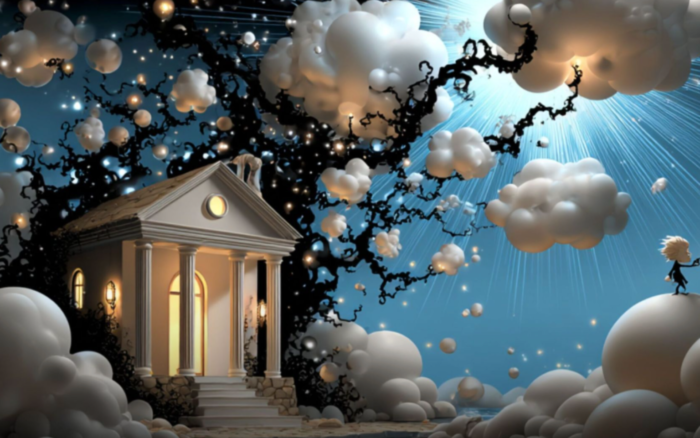
The recording spot was deeply personal. I flew from London to my hometown in Corsica, then hiked with a head torch in pitch-black darkness through the ‘machja’ (wild Corsican biome) loaded with gear. Setting up, with a deadline that can’t be pushed back (when the sun comes up, you’ve got to be ready!) and plenty of technical constraints: it all felt like a mission! But it was worth it: performing from a ruined tower overlooking the sea and mountains is something special. It perfectly aligned with the imperative risk-taking and constraints intrinsic to my creative process and with my hyperactive nature. All these feed into my craft, where I try to convey the wild, unique, beautiful but also the efforts and struggles, into a sonic journey. As the sun came out, the heat quickly turned the spot into an oven, a camera even failed. My work being inspired by space, one can easily imagine how, from my cherished hilltop, I could take off from Planet Earth, into the unknown of the cosmos.
This project leans heavily into improvisation, how do you approach creating structure without relying on pre-arranged sequences?
I designed the THRiPPS system to give me total freedom of choice: I can sculpt hypnotic sequences entirely in the moment, using various sequencers and synthesizers, or recall specific MIDI notes from previous jams. This modularity in complexity and improvisation came as a necessity early on: coming from a DJ background, I like the idea of echoing and reinterpreting tracks in a unique way. A set of macros I designed (knobs controlling several parameters at once) allows me to vary the intensity of music and to improvise on a structure instinctively. Sometimes I push a macro a bit too far and have to recover quickly, which often leads to new directions: I love to build around unexpected moments – in Ketarion, for example, there’s a passage of the track where I bend the pitch. This originally resulted from a happy accident where the pitch drifted. I tend to mimic it when performing, to remember that first spark and to exploit its psychedelic effect.
Your work is deeply rooted in hardware, what does your live setup look like, and how has it evolved during this project? How important is physical interaction with machines in your creative process compared to working in-the-box?
Physical interaction is essential as I tend to work more intuitively with tangible objects. It keeps me away from the distraction trap of a computer screen. Working in-the-box is great for tweaking and polishing; but to create the raw material, there’s nothing better than an instrument. We could argue that my system is a very personal ensemble of instruments – nothing beats the visceral bond of turning a physical knob. I tend to follow my motto WYHWYT (What You Hear Is What You Touch) plus the one-knob-per-function philosophy.
I’ve codified the machines into a mental map that fits my space cruising inspiration. An Analog Rytm is my main spaceship ’Engine’, used for drums and clock. A Minitaur, a perfect toolbox bass, is where the ’Energy’ comes from. A Dreadbox Typhon represents the ’Mind’ through trippy melodies. Roland Aira T-8 also nicknamed ’Grit’, and Roland TR-6S aka ’Auxiliary Engine’, complete the setup, providing the acid sound and additional drums.
How did working with Hannes Bieger shape the final sound of the record?
I chose Hannes because of his legendary work with artists like Stephan Bodzin, but also because he’s a fellow live performer who understands those kinds of challenges. I knew my sound was rich, with multiple layers, changing rhythms and evolving melodies. Since I recorded mostly with analog gear, he made everything sound a bit more homogeneous and compact, volume-wise. He did a stellar job respecting the DNA of the live takes, giving the record the world-class precision it needed to translate on a massive sound system. He’s also a lovely human being and a big foodie, so we spent as much time talking about Corsican cuisine as we did about frequency masking! Beyond the mixdown, the human connection is equally important!
Being selected for Richie Hawtin’s PhD scholarship is a huge recognition! How has that experience influenced your direction as an artist? And how directly does that research feed into your music?
Thank you! While my core sonic identity remained unchanged, the scholarship introduced a layer of analytical rigour to my workflow, teaching me to balance raw instinct (first person) with objective reflection (third person). I was already inspired by Richie and other artists beforehand, deep into techno, wilderness and outer space. However, it forced me to take some distance and analyse what I’m doing.
This duality of instinct versus reflection wasn’t always natural for me, but I now separate the two. It is similar to how I separate creative moments from technical ones, which I use to improve my system. I became better at compartmentalising, more rigorous when needed, but still able to disconnect from problem solving, have fun or let the emotions talk through music. That’s the most important. Maybe, the time-bound nature of the PhD also acted like a clock that couldn’t be negotiated with, forcing a situation where setting up constraints ultimately channels my creativity.
I’ve had the incredible privilege of speaking with legends like Frank Wiedemann, Colin Benders and Richie himself for the research – sometimes learning new things, confirming or challenging a belief I had before. Hearing them share similar struggles inherent to the live unpredictability reinforced my confidence that I’m on the right path. This process is really insightful.
You talk about “risk” as a creative tool, why is that so important to you?
To me, risk is instrumental in what makes the difference in the fine line between product and art. Most ‘art’ can be reproduced, even though it might be polished or smothered by automation. But what prompted its creation initially, by a human being, if not from their experience and emotions felt at a specific moment? With this vulnerability, there’s no way to bypass this – the artist is feeling it truly, there’s no way to fake it when you’re on the edge – and the audience feels that. It is often said that people reveal their true selves when challenged or stressed. This might be a stretch here, as it touches psychology, but I believe that a good way to be true to yourself is to leave the comfort zone, see how your mind and body react, and create something out of it. More importantly, I don’t look back at technical glitches with regret: I see them as necessary lessons.
There’s a strong list of remixers involved, including Dubfire and .VRIL. How did you approach opening up such a personal project to reinterpretation? What are you most curious to hear when other artists rework your music?
It never felt like an effort to let other people mess around with my material, especially if this would motivate people who influenced me first: talking about closing the loop! Giving them carte blanche and hearing their work later on felt really positive, not only for the final result, but also for a lovely treasure hunt: trying to find out which samples or sequences they used and how they flipped them. The process sometimes reveals what they like or what draws them to your sound, for example. It’s quite refreshing!
Seeing a small detail from my work become the foundation of a track, for a master like Dubfire, is a huge compliment. Also worth mentioning, the album was completely finished before I opened it up to reinterpretations, so there was no possibility of anyone interfering with my original creative process.
Where do you see yourself sitting within the wider techno landscape right now?
Trap question alert! 😉 I am aware Techno has various definitions, depending on who speaks: everyone seemingly has the true answer, and we tend to believe in our own definition first.
When I hear the word ‘techno’, I tend to think of its roots in Detroit and evolution in Berlin, where I deeply connected with it. I like to respect a sense of history. But things have evolved and subgenres have emerged, sometimes too political or compartmentalised for my taste. Some people position themselves within a scene or a clique. The truth is, I don’t try to fit any of these, and I just let my creativity express itself, which is how I thrive as an artist.
For me, techno is about experimentation, the unknown, the overwhelming power of a sound system, letting go, taking the time to appreciate a journey, and a connection to the underground. This is mostly opposed to the global online popularity contest and immediate dopamine cravings. However, we are in an era of mass consumption where social media has become an unavoidable vector of communication – rare are the artists who can avoid it today. While I can’t deny it, I’ll continue to advocate for the music itself as staying true to myself is my priority.
Looking ahead, where does this project take you next, both musically and within your research?
Opportunities are forming for what’s coming up next, but also the research is in its later stages so it is a crucial moment and I need to stay sharp for it. Over the last three years I enjoyed interviewing experts, teaching at Uni, reflecting on the practice, solving technical issues and producing music – this sounds like the right blend to me.
On the creative side, a second album is already in progress, shifting toward a darker, more psychedelic territory, but I also have new EPs and more collaborations, plus upcoming podcasts and gigs: I’ll be playing in Cyprus next month then supporting Dave Clarke in Brighton for City Wall. Trying to make the most of it, while keeping the sonic voyager mission alive!
Hear more form Petru here:
Instagram tags: @petru.live and @kolibrispaceshuttle