A new scientific study designed by Emma Marshall, founder of MIM, and backed by AlphaTheta has shown the positive physical effects that come from guided movement to electronic music.
The study demonstrated that a structured session combining electronic music and guided movement can support measurable changes associated with stress regulation, calm the nervous system, and support rapid physiological recovery.
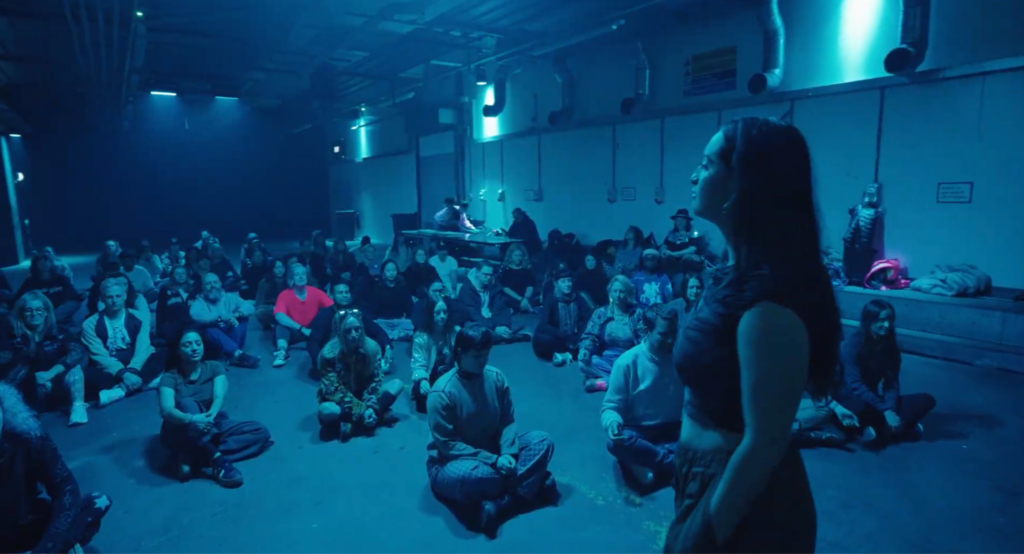
In collaboration with AlphaTheta, studied sessions were conducted by Emma Marshall, founder of Music and Movement is Medicine (MIM), at London events venue Drumsheds. The research was led by Professor Paul Dolan, from the Behavioural Science faculty at the London School of Economics.
In each of the two hour-long studied sessions, a different group of approximately 60 participants was guided through a carefully structured experience – from quiet listening and breathing exercises, through seated micro-movements, to standing, marching, and ultimately free dance.
Using devices to measure heart rates and heart rate variability (HRV), more than 600,000 heartbeats were captured, providing a granular biometric portrait of changes to the human body when dancing to music.
Results were consistent across both sessions, and included:
-
18.5% rise in HRV during the guided breathing and seated movement phase – a clear sign the nervous system was actively shifting into a calmer, more resilient state (p = 0.01).
-
75% of personal heart rate reserve reached during free dance, placing participants firmly in the vigorous exercise band.
-
4–10× HRV rebound within minutes of the session ending – the body recovered rapidly from high-intensity activation.
Key observations:
1. The calming phase indicates that guided movement is a genuine parasympathetic intervention, reversing the body’s fight or flight mechanism and reducing stress.
2. The changes in heart rate appear to be attributable to the exercise, not to stress levels, which were confirmed based on recovery patterns.
3. The participants’ self-reported experiences of the session matched the physiological indications.
While rises in heart rate are sometimes associated with stress and anxiety, the study showed that heart rate increases during the dance phase were explained by movement intensity – a pattern consistent with exercise. The nervous system was grounded before it was pushed, and it recovered rapidly when the session ended. These are the hallmarks of healthy, regulated arousal. Self-reported wellbeing data collected from participants reinforced the physiological findings: Anxiety scores fell, joy scores rose, and feelings of connection to others increased significantly from before to after the session.
Speaking about the study, Mark Grotefeld, AlphaTheta’s General Manager said: “At AlphaTheta, we’ve always known that music moves people – and this research offers fascinating insight of how and why. These findings open up conversation about how the tools DJs use every day can have a measurable impact on human physiology, and should change how we think about the role of music in people’s health and wellbeing.”
The research reveals that different musical elements drove the body at different stages of each session, and the DJ played a key role in shaping participants’ physical responses. During calm phases, tempo (BPM) was the strongest predictor of heart rate – with a correlation of r=0.85 (p < 0.001) in Session 1. As the session built, loudness took over as the primary driver. During peak dance, no single audio feature predicted heart rate, because the body had generated its own cardiovascular momentum.
The research also revealed the “carrying momentum” effect: when the DJ dropped the tempo during breakdowns, participants’ heart rates stayed elevated – and HRV remained at its floor – suggesting the body had entered a state of sustained immersion rather than responding to each musical moment in isolation.
Commenting on the findings, behavioural scientist, Professor Paul Dolan, from London School of Economics, said: “Thanks to these data, we can see how the body immediately reacts to changes in BPM. It turns out the DJ is doing something physiologically significant – not just playing music but guiding the nervous system. This opens up new ways of thinking about electronic music.”
Emma Marshall, founder of MIM, added: “This isn’t just about dancing. When the music and the experience are structured in a specific way, they guide the body through a clear cycle – calm, build, peak, and recovery. The data shows measurable stress regulation happening in real time, not as a side effect, but as the direct result of how the experience was designed.”
At a time when venues, and nightlife in general, are under threat, the study contributes to support conversations around how important it is for people to be able to come together and dance. Reflecting on the results, Luke Huxham, Managing Director of Broadwick Live (Drumsheds), said: “Anyone who has spent real time on a dancefloor already knows what this research is now able to prove. It’s how generations have connected, processed, and recovered, and the people who work within music and nightlife have always understood that instinctively. What this study gives us is the language and evidence to take that case to local councils, policymakers, licensing authorities, and public bodies to make a stronger argument for why these spaces need to be protected. That feels overdue, and we’re proud to have helped facilitate this first phase of research.”
This study is the first phase of a broader research program led by MIM, with the goal of generating peer-reviewed evidence on the health benefits of dancefloor experiences. Phase 2 of the research will test the MIM protocol in randomised and controlled settings, comparing the structured guided experience against unstructured dancing and other interventions to show the causal effects of the design itself.